Audit is not logging
Most industrial systems log extensively.
Every change is timestamped. Every action is recorded. Every system produces files, tables, and audit logs.
And yet, when something goes wrong, the same question appears:
What actually caused this outcome?
What logging really provides
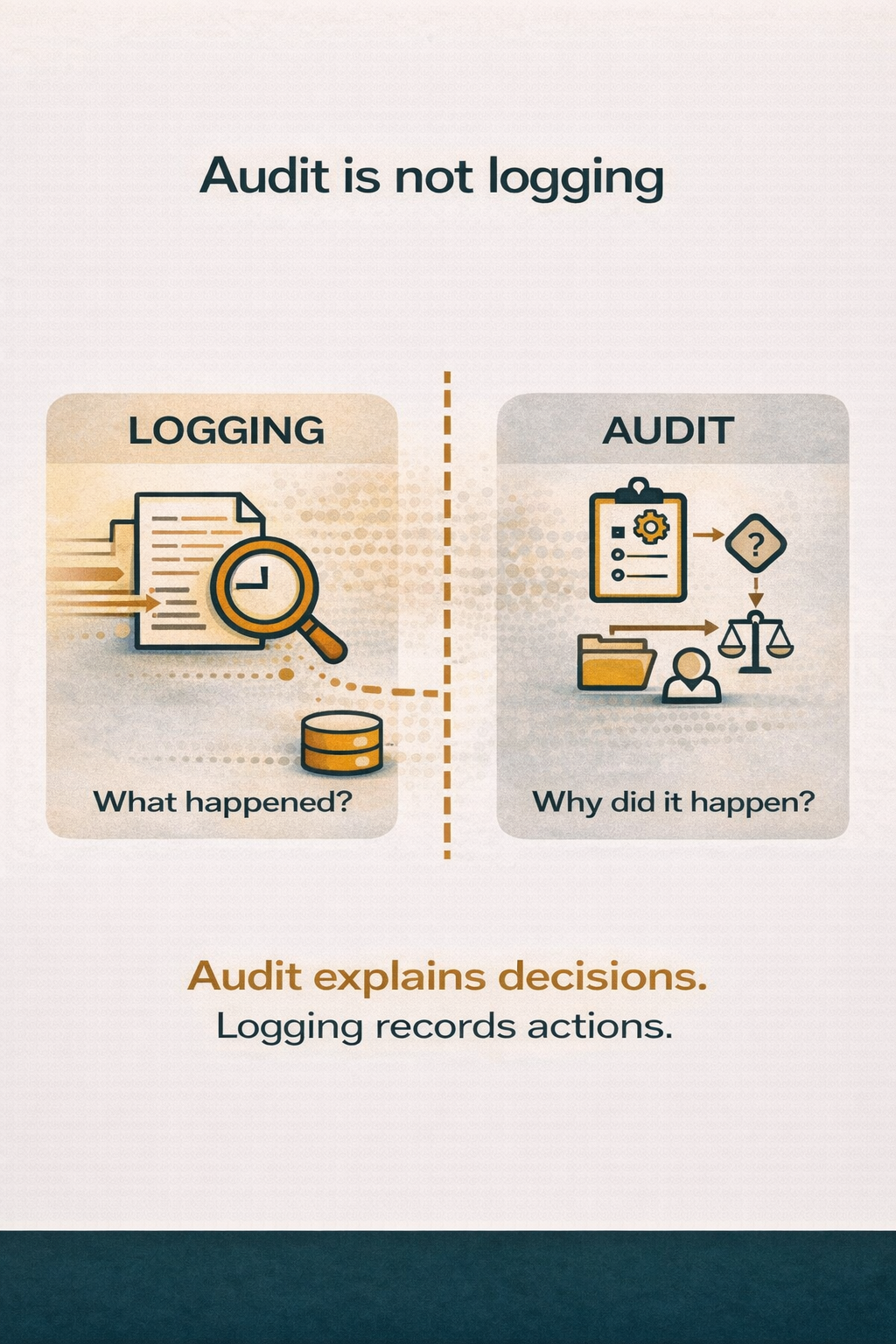
Logging answers one question well:
What happened?
User X changed parameter Y at time T. System A sent message B to system C. A file was created, transferred, and processed.
Logs are factual. They are chronological. They are easy to store.
But logs do not explain decisions.
What auditability actually requires
Auditability answers a different question:
Why did the system behave this way?
That question cannot be answered by logs alone.
To explain a decision, a system must make explicit:
- Which inputs were considered
- Under which conditions
- In which sequence
- Based on which rules or models
- And with which authority
This information is rarely present in traditional audit logs.
The missing layer: decision context
Most modern systems make decisions continuously.
Access is granted or denied. Processes are triggered automatically. Thresholds are evaluated. Models classify and rank outcomes.
The data flows are visible. The dashboards look coherent.
But the decision logic often remains implicit.
When such systems fail, the problem is rarely missing data. It is missing clarity.
Clarity about where decisions happen. Clarity about who owns them. Clarity about what cannot be undone.
Why regulated systems expose the problem
Regulated systems did not invent overhead.
They were forced to answer uncomfortable questions early:
Who is allowed to change system behavior? Which decisions are reversible? Which are not? How can this path be explained later?
Most non-regulated systems postpone these questions. Not because they do not matter, but because nothing forces an answer yet.
That is why regulated environments surface architectural weaknesses so clearly.
Audit chains versus audit logs
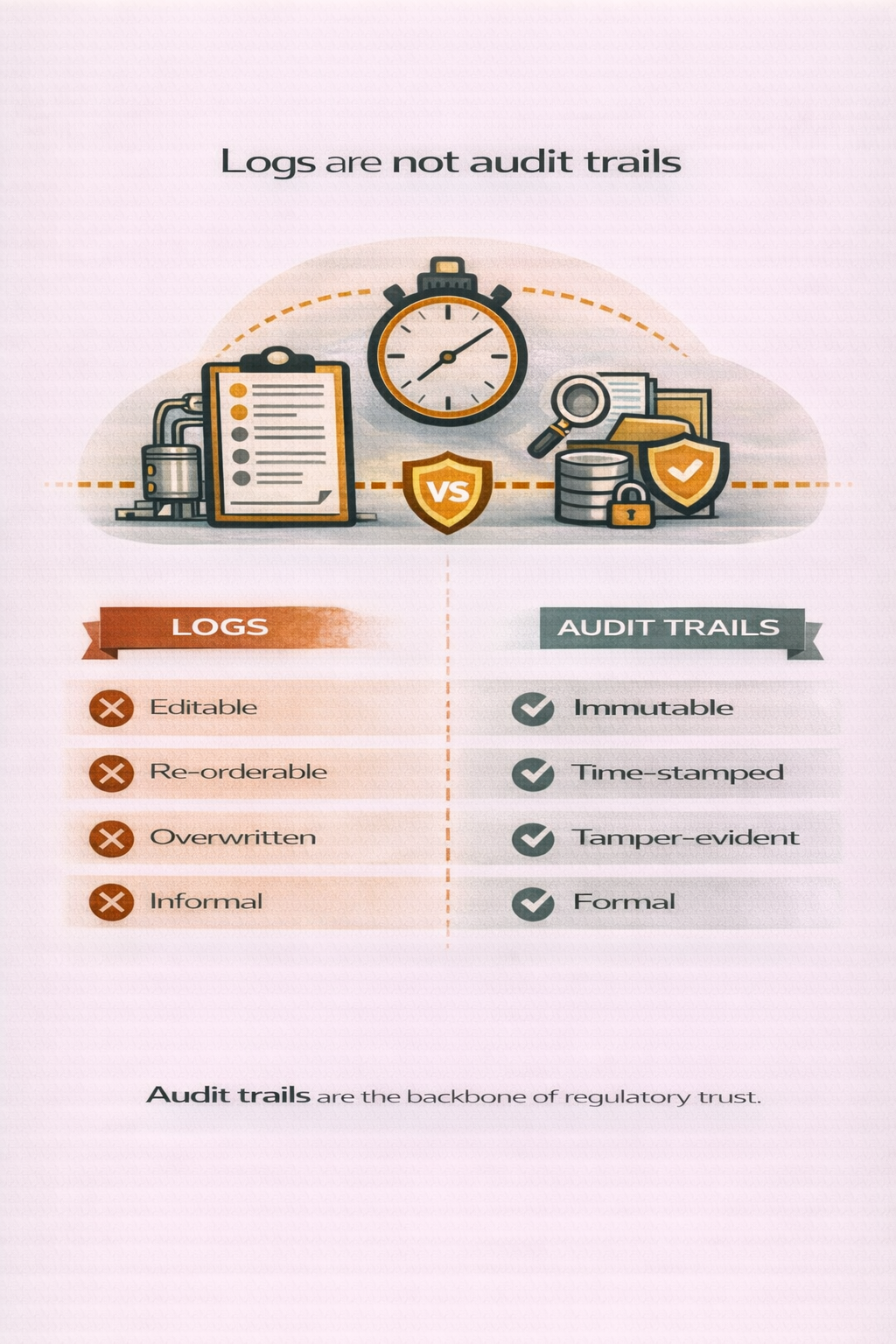
An audit log records actions.
An audit chain explains outcomes.
An audit chain links:
- events
- decisions
- transformations
- responsibility
- and time
It is not a document. It is a structural property of the system.
When auditability is added later, it becomes documentation. When it is designed into the architecture, it becomes explanation.
Why this matters beyond GMP
As systems become more automated and more autonomous, this distinction is no longer limited to regulated environments.
AI does not break compliance. Implicit architecture does.
When decision boundaries are unclear, accountability collapses. When accountability collapses, trust disappears.
Audit is not a logging problem. It is a design problem.
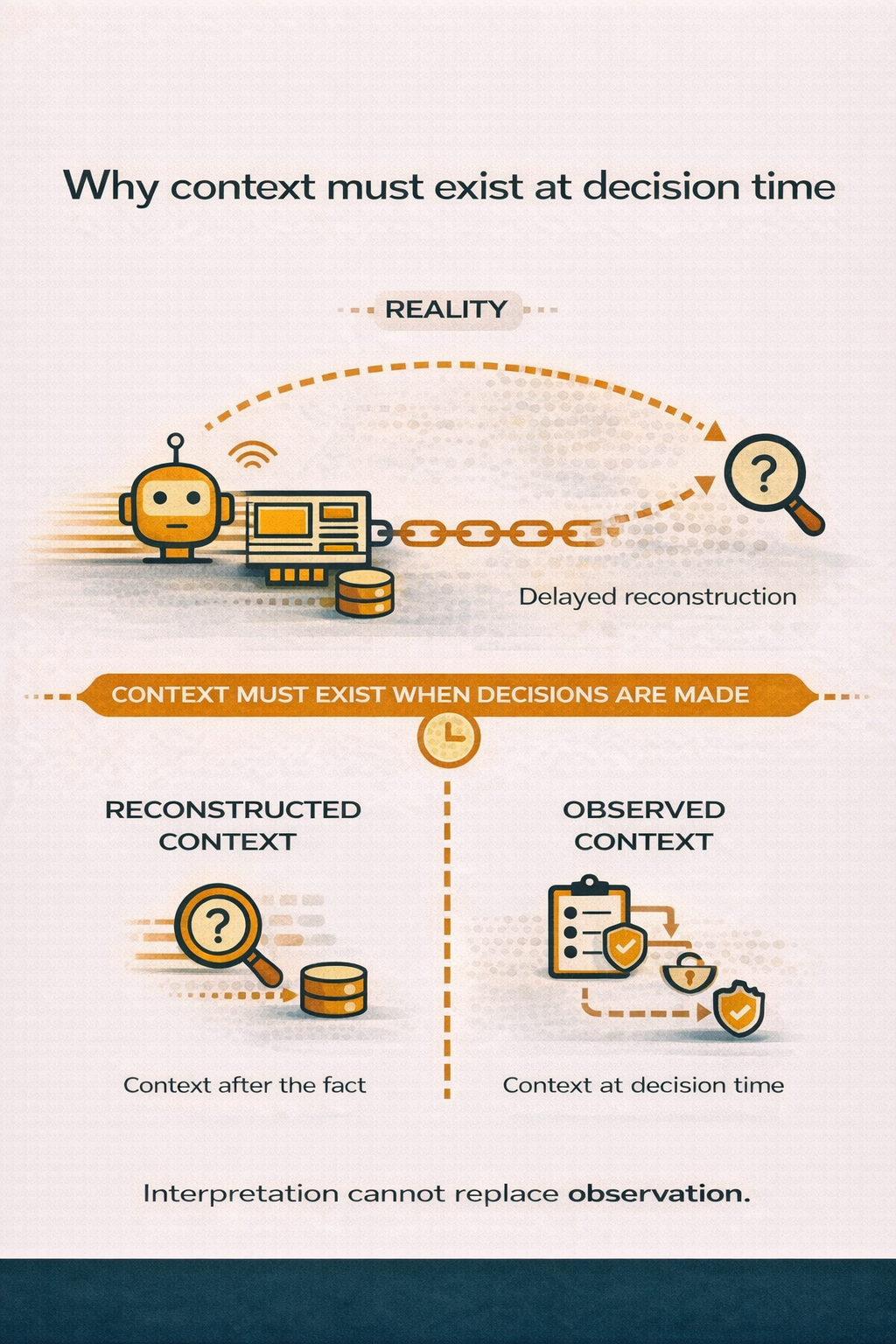
And it must be solved where decisions are made, not where logs are collected.