Decision-centric architecture
Most architectures are data-centric.
They describe how data is collected, stored, transformed, and visualized.
Decisions are treated as side effects.
From an audit perspective, this is backwards.
Systems already decide constantly
Modern systems make decisions all the time.
Access is granted or denied. Processes are triggered automatically. Thresholds are evaluated. Models classify, rank, and filter outcomes.
These decisions influence real behavior.
Yet they are rarely modeled explicitly.
Why decisions must become first-class citizens
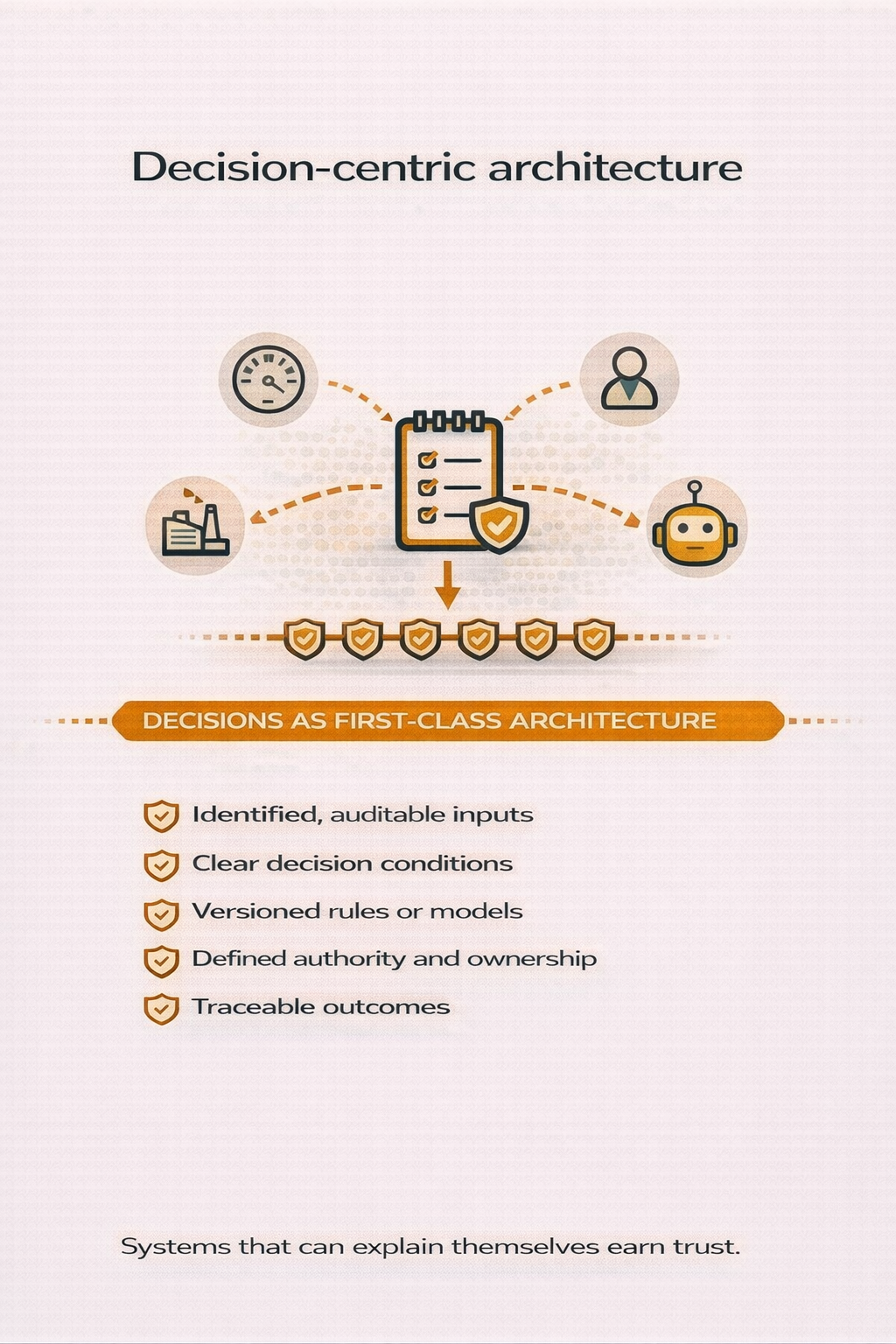
A decision is not just a computed value.
It has:
- inputs
- conditions
- rules or models
- authority
- and consequences
When these elements remain implicit, accountability disappears.
Logs may show that something happened. They rarely explain why it was allowed to happen.
What decision-centric architecture changes
In a decision-centric system:
- Decisions are explicitly identified
- Decision logic is versioned
- Input context is preserved
- Authority and ownership are defined
- Outcomes are traceable over time
This does not slow systems down. It makes them explainable.
Why this matters for regulated and automated systems
As automation increases, human oversight shifts from execution to supervision.
That only works if systems can explain themselves.
Context must exist at the moment a decision is made.
Decision-centric architecture is not a compliance feature. It is a prerequisite for trust.