Short answer
Yes, MQTT can be used inside a GxP-relevant system. No, an MQTT broker is not GxP compliant by itself. MQTT is a messaging protocol; compliance belongs to the configured system and its intended use.
For data integrity and audit trails, the surrounding system must prove more than message delivery. It must preserve who acted, when it happened, which topic and operation were involved, which policy was active, why the action was allowed or blocked, what changed and whether the evidence can still be trusted later.
If you need the practical reliability checklist for production use, read: How to ensure reliable MQTT messaging in GMP-regulated manufacturing.
Transport is not evidence
A standard MQTT broker can show that messages moved.
A client connected. A topic was used. A message was published. A subscriber received data.
These facts matter.
But in a regulated environment, they are not enough.
GxP-relevant systems must answer harder questions:
Who sent the message? Which policy allowed it? Which policy version was active? Was anything blocked? Was anything changed? Can this be proven later?
A broker that only moves messages cannot answer these questions by itself.
Where GxP relevance begins
Not every MQTT message is automatically GxP-relevant.
A message becomes more critical when it influences:
- product quality
- batch status
- process parameters
- machine state
- alarms and deviations
- recipe or configuration changes
- release-relevant decisions
- audit records
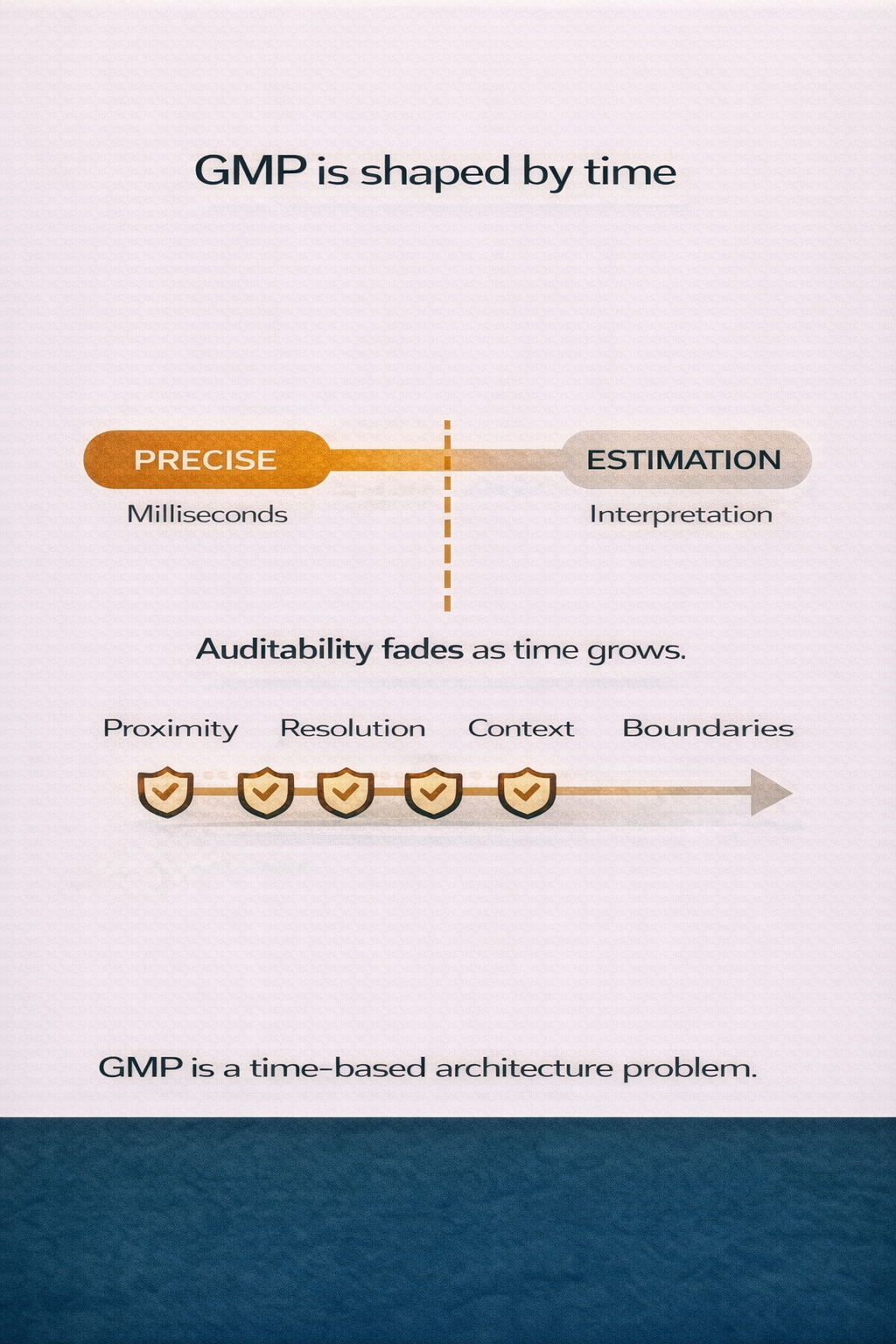
The closer messaging gets to product or process decisions, the stronger the evidence model must become.
GMP requirements tighten with proximity to execution.
Data integrity is more than delivery
Reliable delivery is important.
MQTT QoS can help define delivery behavior. Persistent sessions can help with reconnects. Retained messages can support state distribution.
But reliability is not the same as data integrity.
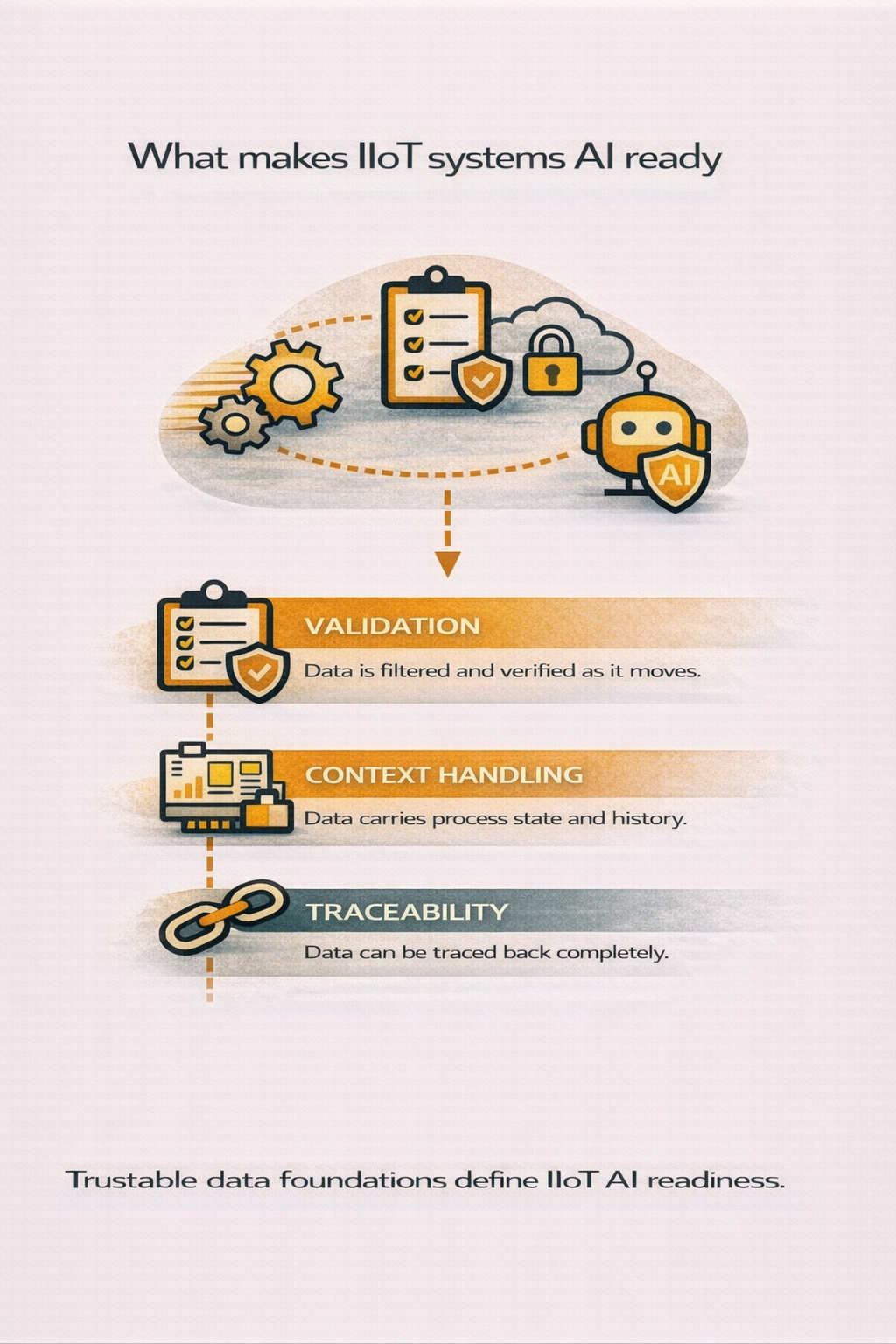
Data integrity asks whether the record can be trusted later.
That means the system must preserve:
- identity
- timing
- sequence
- policy context
- configuration state
- decision reasons
- and change history
A message can be delivered successfully and still be impossible to defend during review.
Audit trails are not broker logs
Broker logs are usually technical.
They help developers understand system behavior. They help operators diagnose failures. They often describe events from the broker’s perspective.
Audit trails need a different structure.
They must explain decisions.
Why was this publish allowed? Why was this subscribe rejected? Why did this configuration change take effect? Who had authority? Which rule was active?
Auditability is not created by collecting logs.
A log line records that something happened. An audit trail explains why it was allowed to happen.
The missing layer is decision context
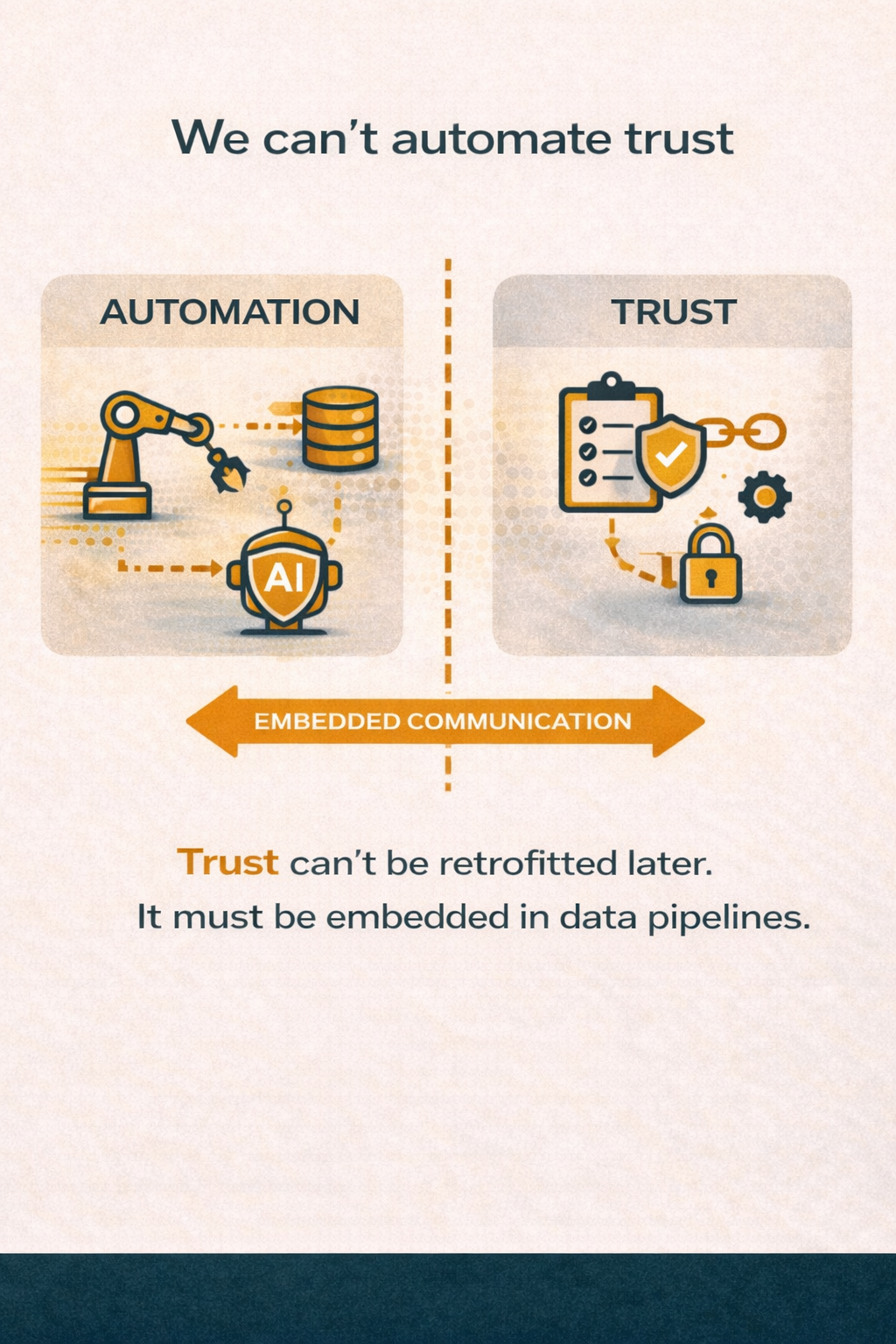
MQTT architectures often treat the broker as neutral infrastructure.
That is fine for simple transport.
But regulated systems cannot stop at transport.
Whenever a message is allowed, blocked, routed or rejected, a decision has occurred.
That decision has context:
- the client identity
- the requested operation
- the topic
- the active policy
- the policy version
- the system state
- the reason for the outcome
If this context is not captured when the decision happens, it becomes reconstruction later.
Reconstruction is weaker than observation.
Context must exist at the moment a decision is made.
What an audit-ready MQTT record needs
An audit-ready MQTT event does not need to expose every payload.
It needs to explain the relevant decision.
A useful record should contain:
- who or what acted
- what operation was requested
- which topic was involved
- whether the action was allowed or blocked
- why the decision was made
- which policy and configuration version applied
- when the event happened
- how it relates to process or batch context
- whether the record can be proven unchanged
The goal is not more logging.
The goal is reviewable evidence.
The common mistake
Many teams assume:
If the broker is reliable, the system is compliant.
This is a dangerous shortcut.
A reliable broker can still leave open questions:
Who changed access rights? Which rule allowed this message? Was the message rejected or silently lost? Was this state change approved? Can QA understand the evidence without developers?
Compliance does not emerge from message transport.
It emerges from controlled, explainable system behavior.
Decisions must become first-class architectural elements.
Where TrailMQ fits
TrailMQ is a self-hosted MQTT broker designed for this gap. Standard MQTT clients connect to it directly over TLS or WebSocket.
In TrailMQ 3.1.1, each action must pass the identity’s role permission and the namespace/topic rule. Allowed operations and refusals are stored in a dedicated MQTT decision store with identity, client, action, topic, outcome and a canonical denial reason.
The purpose is to make message behavior reviewable:
Who connected. Who published. Who subscribed. Why something was allowed. Why something was blocked. What changed. And which integrity scope applies to the evidence being reviewed.
This is the difference between moving messages and explaining message decisions.
The integrity boundary matters: TrailMQ’s hash-linked validation checks the separate system/action store. It does not tamper-check MQTT message evidence, including publish and subscribe refusals. The public architecture and trust model documents that scope.
What TrailMQ does not replace
TrailMQ does not make an organization compliant by itself.
No software product can do that.
A regulated environment still needs:
- risk assessment
- validation strategy
- change control
- access management
- operating procedures
- backup and restore concepts
- periodic review
- and quality ownership
TrailMQ can provide technical controls and reviewable evidence for assessment.
The organization still owns the compliance process.
The practical rule
When evaluating MQTT in a GxP environment, ask one question:
Can we explain this message decision six months later?
If the answer is yes, MQTT can become part of a trustworthy regulated architecture.
If the answer is no, the broker may still be working technically.
But the system is not yet audit-ready.
For a field-by-field evaluation guide, read what an MQTT data transaction audit trail solution should record.