Short answer
Reliable MQTT messaging in GMP manufacturing requires both transport controls and trustworthy evidence. Choose QoS, session and retained-message behavior from process risk, then add authenticated identities, topic authorization, explicit failure handling, synchronized time, change control and validation of normal and blocked paths.
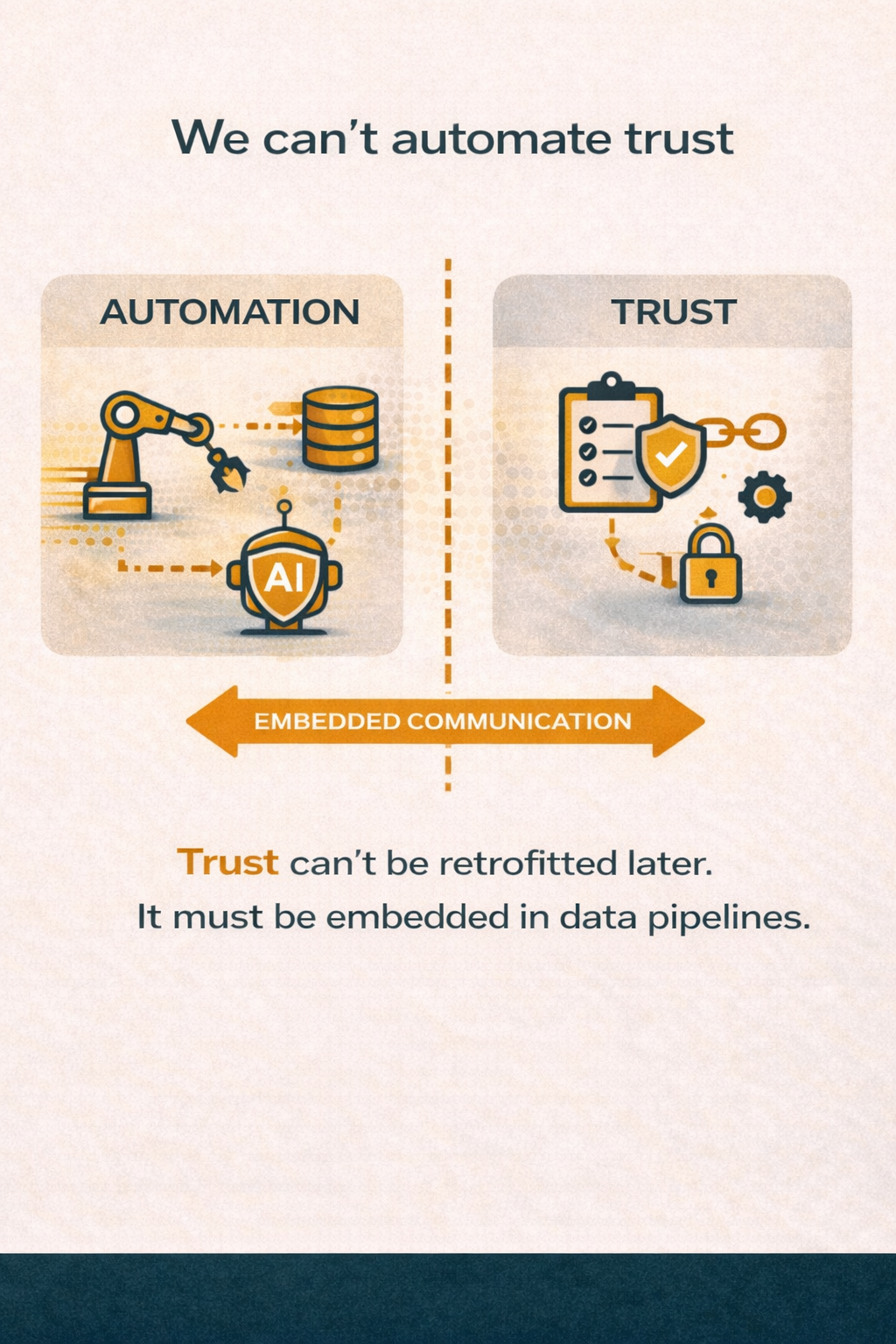
MQTT reliability is about transport behavior. GMP reliability is about whether the resulting record can be trusted, explained and reviewed.
Both matter. They are not the same thing.
An MQTT broker can help messages move reliably. It cannot, by itself, prove that a GMP-relevant decision was authorized, complete, attributable, unchanged and reviewable months later.
That evidence has to be designed around the broker.
First decide which messages are GMP relevant
Not every MQTT topic needs the same level of control.
A temperature value used only for local visualization is different from a value that influences batch release, alarm handling, deviation assessment or recipe control.
Before choosing technical controls, classify the message path:
- what publishes the message
- who or what subscribes to it
- whether it affects product quality
- whether it changes machine, batch or recipe state
- whether it is used for release, review or investigation
- what happens if the message is late, duplicated, lost or replayed
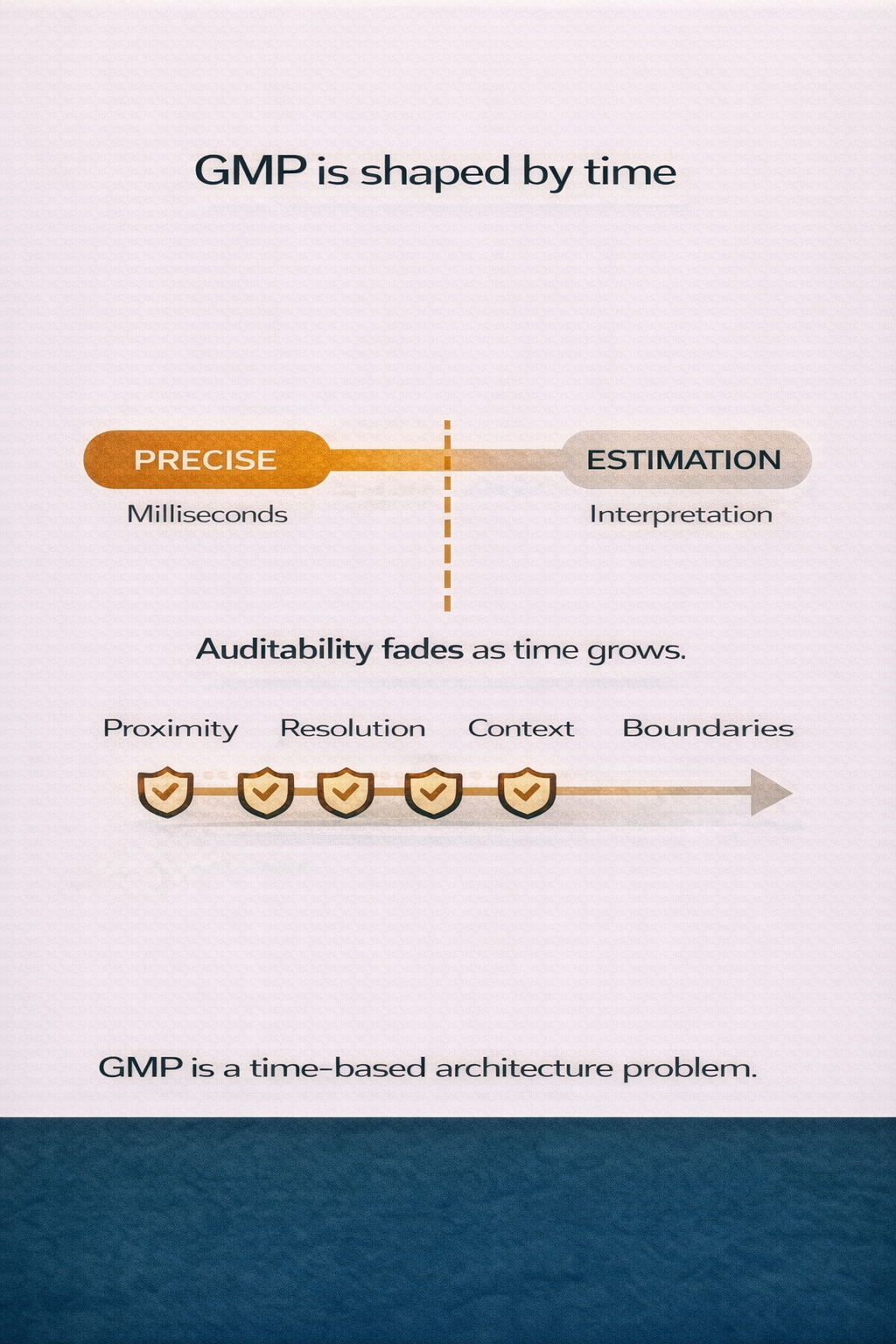
The closer a message gets to product quality or process execution, the stronger the evidence model must become.
GMP requirements scale with proximity to execution.
Use MQTT delivery features deliberately
MQTT gives teams useful reliability mechanisms, but those mechanisms must match the risk of the message path.
Typical design choices include:
- choosing QoS levels based on acceptable loss or duplication behavior
- using persistent sessions where clients must receive queued messages after reconnect
- using retained messages only where a last-known state is safe and meaningful
- defining clean reconnect behavior for each client type
- handling Last Will messages for disconnected devices
- setting keepalive values that reveal broken connections quickly enough
- designing idempotent consumers where duplicate delivery is possible
The important point is not to choose the highest setting everywhere.
The important point is to document why the selected behavior is correct for that process risk.
Reliable transport is part of the answer. It is not the whole answer.
Add identity and authorization around every decision
In GMP-regulated manufacturing, “a message arrived” is rarely enough.
A reviewer may need to know:
- which device, service or user published it
- whether that identity was authenticated
- which role or permission applied
- whether the topic was allowed
- which policy version made the decision
- whether the action was allowed, blocked or deferred
This turns broker behavior into reviewable system behavior.
Without identity and authorization context, later review becomes reconstruction. Reconstruction is weaker than evidence captured at the moment of the decision.
Context must exist at decision time.
Treat failures as records, not just incidents
Reliable messaging is tested most clearly when something goes wrong.
GMP-relevant systems should define what happens when:
- a publisher disconnects during a batch
- a subscriber is offline
- a message cannot be authorized
- a retained value is stale
- a payload is malformed
- a policy changes during operation
- a queue exceeds its limit
- a retry succeeds after a delay
- a message is sent to a dead-letter path
These events should not disappear into technical logs.
They should become records with enough context for later review. For regulated environments, “handled by the broker” is not the same as “explained to QA.”
Preserve data integrity evidence
Data integrity asks whether a record can be trusted later.
For MQTT-based systems, useful evidence includes:
- timestamp and clock source
- topic and operation
- client identity
- payload reference or digest where appropriate
- policy and configuration version
- decision reason
- sequence or correlation identifier
- delivery or queue outcome
- change history for users, topics and policies
- tamper-evident linking or equivalent integrity protection
The system does not always need to store every payload forever. But it must preserve enough context to show what happened, why it happened and whether the evidence stayed intact.
Audit trails are not the same as broker logs.
Validate the behavior, not only the broker
A broker can be installed correctly while the regulated workflow remains weak.
Validation should cover the behavior that matters to the process:
- allowed publish path
- blocked publish path
- allowed subscribe path
- rejected subscribe path
- reconnect and queued message behavior
- duplicate or replay handling
- stale retained message handling
- policy change behavior
- audit trail creation
- evidence review and export
The goal is not to prove that MQTT works.
The goal is to prove that the configured system behaves as intended for the GMP-relevant use case.
A practical checklist
Use this checklist before treating MQTT as reliable enough for a GMP-regulated workflow:
| Area | Question |
|---|---|
| Criticality | Which topics influence product quality, batch state, alarms, deviations or release decisions? |
| Delivery | Which QoS, session and retained-message behavior is justified for each topic class? |
| Identity | Can each publisher, subscriber, service and operator be attributed? |
| Authorization | Can the system prove which policy allowed or blocked the action? |
| Failure handling | Are disconnects, retries, queue limits and dead-letter cases explicit and reviewable? |
| Time | Are timestamps synchronized and meaningful for later sequence review? |
| Change control | Are topic, client, role and policy changes recorded with authority and reason? |
| Data integrity | Can records be shown to be complete, attributable, legible, contemporaneous and unchanged? |
| Validation | Have normal, blocked and failure paths been tested against the intended use? |
| Review | Can QA, OT or validation teams understand the evidence without reconstructing it from raw logs? |
If the answer is unclear, the risk is usually not MQTT itself.
The risk is missing evidence around MQTT.
Where TrailMQ fits
TrailMQ is a self-hosted MQTT broker for paths where access decisions must remain attributable and reviewable. Standard MQTT clients connect directly; there is no TrailMQ SDK, proxy or sidecar.
TrailMQ 3.1.1 applies role permission and namespace/topic policy before the operation proceeds. It records MQTT decisions separately from its hash-linked system/action history.
That helps teams answer questions such as:
- who published or subscribed
- which topic was involved
- why a message was allowed or blocked
- what configuration changed
- whether the reviewed record falls inside or outside the system/action chain’s validation scope
The current integrity check does not cover MQTT message evidence and the Preview is not a payload browser. Delivery proof still comes from a real subscriber. These boundaries are documented in the public TrailMQ architecture and trust model.
TrailMQ does not make an organization compliant by itself. It provides technical controls and evidence that can support validation, review and quality ownership.
For the related compliance question, read: Can an MQTT broker be GxP compliant?
For solution selection criteria, read: What should an MQTT data transaction audit trail record?
The core principle
Reliable MQTT messaging in GMP-regulated manufacturing is not achieved by a single QoS setting.
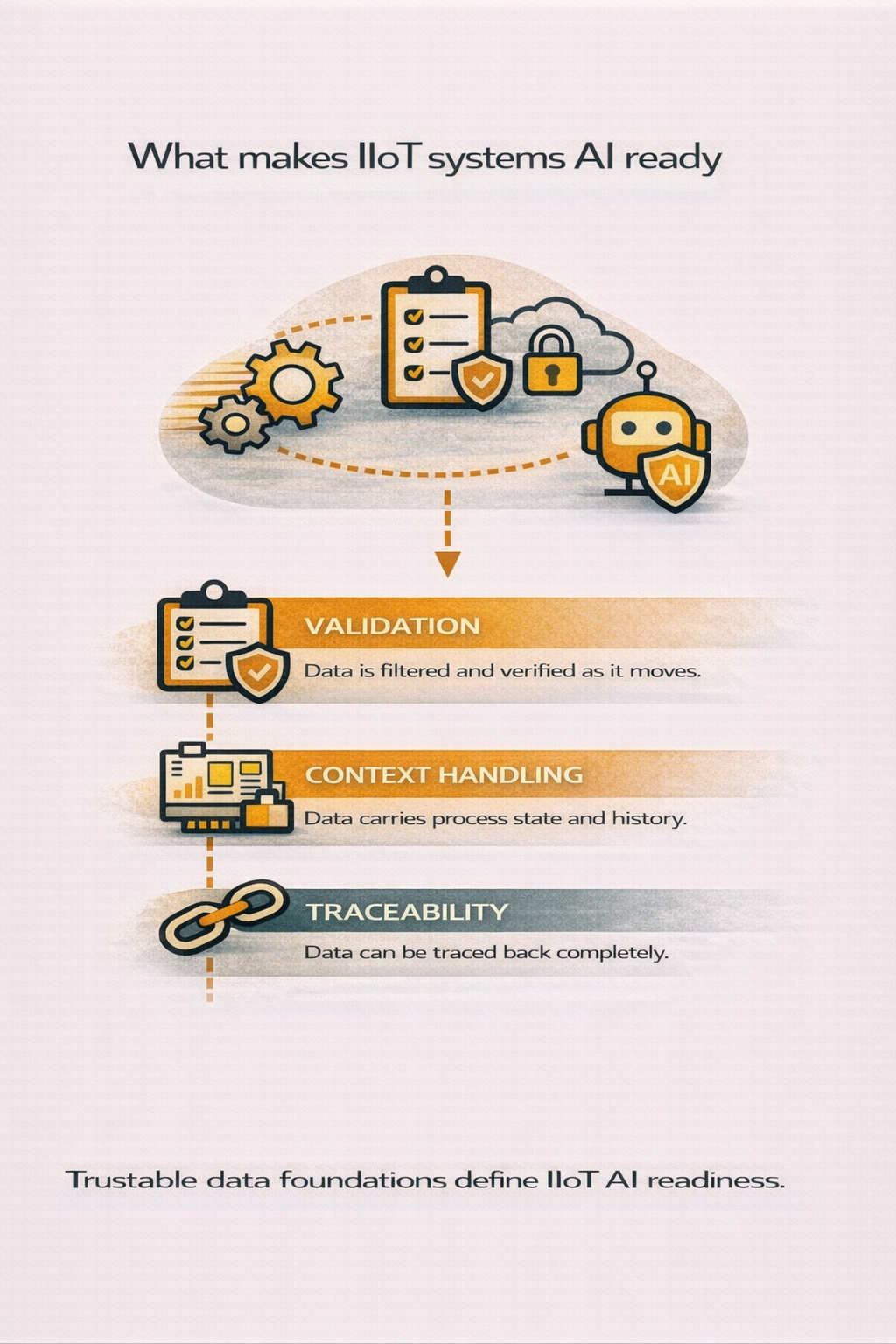
It is achieved when message transport, access control, failure handling, data integrity and audit trails form one reviewable system.
If a message matters to product quality or a regulated decision, the system must be able to explain it later.